Platform Tactics
How to Get Your Agency Cited by ChatGPT
ChatGPT's search mode cites a specific set of source types. Here is what they are, and how to earn a place among them.

Clark Tota
Editor & Founder
Published May 8, 2026 · Updated May 18, 2026 · 10 min read
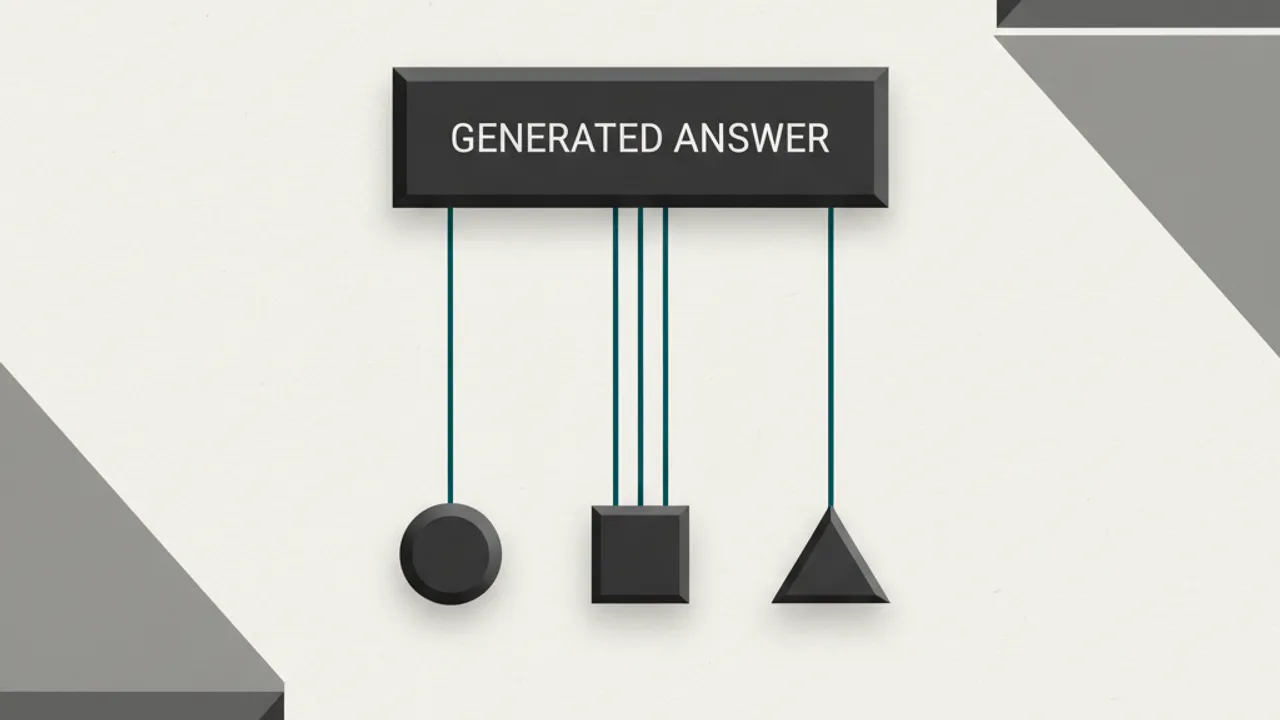
When ChatGPT answers a question with search enabled, it cites sources inline. Getting your agency — or your client — into that citation set is a specific, learnable task. It starts with understanding what ChatGPT tends to cite.
What ChatGPT leans on
Across observed answers, ChatGPT shows a recurring preference for community and reference sources — Reddit and Wikipedia appear disproportionately — alongside established publications and the brand's own well-structured pages. The practical reading: a brand needs both a credible owned presence and corroboration on the platforms ChatGPT already trusts.
- Make your owned pages extractable — answer-first, clearly structured, schema-marked.
- Earn presence where ChatGPT looks — relevant subreddits, a defensible Wikipedia-grade reference footprint, industry publications.
- Keep your entity consistent — same name, same description, everywhere.
The agency angle
An agency cannot post a client into Reddit credibly, and should not try. What it can do is identify the genuine community conversations where the client belongs, help the client participate honestly, and ensure that when journalists or community members do mention the brand, the brand's owned content backs the claim up cleanly.
Before
A client described itself three different ways across its site, its directory listings, and its press. ChatGPT treated these as weakly-related entities.
After
After unifying the name and one-line description everywhere, the brand began surfacing as a single coherent entity in answers.
Takeaway
Consistency is not cosmetic. It is how the model decides two mentions are the same thing.
How to verify it worked
Run the same prompts weekly with search enabled. Log the cited domains. Citation share moving in your favour over a month is the proof — screenshot it, because that screenshot is your renewal conversation.
The Editor
Clark Tota
Clark Tota runs Answer Engine Weekly and a GEO/AEO consulting practice. He spends his weeks running prompt experiments against ChatGPT, Perplexity, Google AI Overviews and Claude — measuring which sources get cited and why — then writing up what actually moved the needle.
More about Answer Engine Weekly →The Weekly
One issue a week. A real experiment, the data, what it means.
One issue a week. A real AEO experiment, the raw data, and what it means for your agency. No fluff, no guru theatre.
No spam. Unsubscribe anytime. We send one email a week.
Keep reading

Google AI Overviews for Agencies
AI Overviews sit on top of the world's largest search engine. Here is how the surface works and how an agency optimizes for it.
Apr 17, 2026

How to Rank in Perplexity
Perplexity has observable ranking factors — freshness, extractability, domain authority, and the right source mix. Here is how to work them.
May 1, 2026

GEO for Solar Companies: How Texas Installers Get Recommended by AI Instead of Buying Recycled Leads
A worked vertical case study: Generative Engine Optimization applied end-to-end to one of the hardest US lead-gen markets — Texas residential and commercial solar. The methodology, not the hype.
May 19, 2026